Summary:
December 15 ends new training jobs. The base model’s retirement date determines how long an existing fine-tune keeps serving requests.OpenAI is moving up the cutoff for new self-serve fine-tuning jobs from January 6, 2027, to December 15, 2026. Starting December 15, even organizations that can still create a job today will no longer be able to start one. Models you’ve already fine-tuned can keep serving requests until their underlying base models retire.
Which deadline applies to you?
If you want to start a training job: Check whether your organization still has access and whether the base model is still available for fine-tuning. OpenAI stopped new organizations from joining in May and restricted accounts that hadn’t run inference on a fine-tuned model in the previous 60 days in July. An earlier base-model shutdown can shrink the remaining window. The updated notice gives a date, not a cutoff hour, and describes job creation rather than what happens to jobs already submitted.
If an application calls a fine-tuned model: Find its exact base snapshot. For example, OpenAI’s supervised fine-tuning guide lists January 14, 2027, for gpt-4.1-2025-04-14 and gpt-4.1-mini-2025-04-14 and their fine-tuned versions. That’s separate from the December cutoff for creating jobs.
Find your production model’s real deadline
- Match each model in production to its training job. In the fine-tuning jobs API, match the ID your application calls to
fine_tuned_model. Readmodelon the same job for the base snapshot, then check that snapshot in the retirement table. - Keep what you can use to rebuild. Save authorized copies of the training and validation data, method and settings, and result files. The job API identifies the result files under
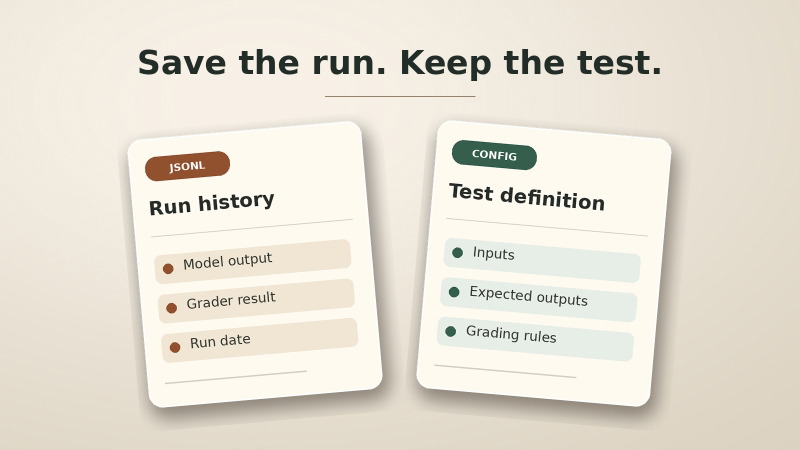
result_files; retrieve them through the Files API. A job ID or results file isn’t a downloadable copy of the trained model. - Test the replacement on examples you held out of training. Run the current fine-tune and a candidate replacement on the same inputs. Check the behaviors you trained for, such as valid JSON or consistent labels, and track latency and cost separately. If your comparisons depend on hosted OpenAI Evals, save the test definition separately from the run results; that service has its own November 30 deadline.